






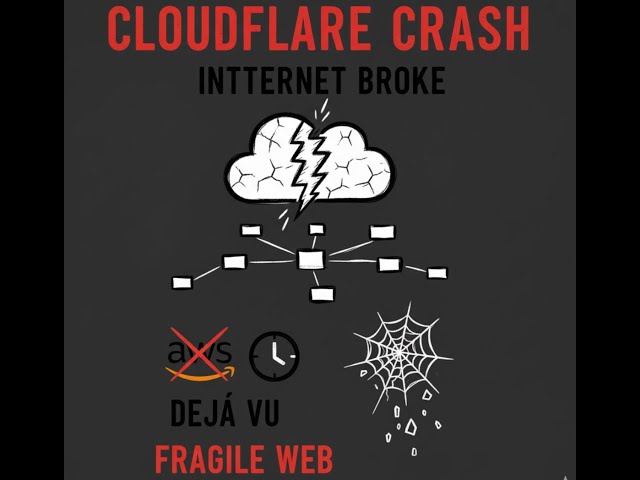
Cloudflare Falls The Internet Breaks A Deep Dive Into a Global Digital Meltdown
Introduction When One Company Falls and the Internet Trembles
The internet is often spoken of as a decentralised marvel a vast, resilient network designed to survive anything from power failures to regional disruptions. But in 2025, the world witnessed something that shattered this myth. For hours, the digital world was plunged into confusion when Cloud flare, one of the most widely used Internet infrastructure companies, suffered a major outage Cloudflare Falls The Internet Breaks.
The event sparked chaos across continents. Popular websites went dark. Mobile apps refused to open. Financial transactions stalled. Content platforms froze. For many users across the globe, it felt like the internet itself had collapsed.
This moment became a defining symbol of the modern digital era:
Cloud flare fell and the internet broke Cloudflare Falls The Internet Breaks.
In this article, we unpack what happened, why it happened, how it exposed the fragile skeleton of modern internet infrastructure, and what the world must learn from this unprecedented digital collapse.
The Monolithic Backbone of the Web Cloudflare’s Immense Power Cloudflare Falls The Internet Breaks
To understand why the outage was so catastrophic, one must understand Cloudflare’s role in the global digital ecosystem.
Cloudflare isn’t just another tech company. It sits at the very heart of the modern internet.
Cloudflare provides:
- CDN (Content Delivery Network) services
- DNS (Domain Name System) management
- Web security and DDoS protection
- Firewall and traffic routing
- Bot filtering and API management
- Caching and load balancing
Millions of websites rely on Cloudflare from small blogs to world-leading corporations. If a website loads fast, safely, and reliably, chances are Cloudflare plays a part.
Why Cloudflare is so important:
- It processes a large slice of global web traffic.
- It protects websites from cyber attacks.
- It ensures smooth content delivery across continents.
- It manages DNS, the internet’s phone book.
- It filters bots and harmful traffic.
So when Cloudflare collapses, the effects are not limited to one service they ripple through the entire digital world.
This is what makes the recent outage so alarming.
The Moment of Breakdown A Global Freeze in Real Time
When Cloudflare fell, the symptoms were immediate and dramatic.
Users saw:
- Error 500 and 502 pages
- Apps refusing to load
- Websites timing out
- Streaming platforms disconnecting
- Online payment gateways failing
- Government portals going offline
- Businesses losing entire operations for hours
Millions of users instinctively ran to social media to check what had happened only to discover that even social platforms were collapsing.
Across the world, frustration, confusion, and panic mounted.
Businesses scrambled to respond.
Banks complained of failed requests.
Cloud-based apps went entirely dark.
The outage revealed a truth no one wanted to face:
The modern Internet is built like a tower and Cloudflare is one of the central pillars. When the pillar cracks, the structure trembles.
Understanding the Failure What Actually Went Wrong?
Cloudflare outages, though rare, usually stem from one of the following technical issues:
Configuration Errors
A small mistake in an internal update can propagate worldwide because Cloudflare’s network is interconnected across continents.
Software Bugs
Even a tiny code flaw can destabilise large sections of the network.
DNS Level Failures
If DNS fails, entire websites instantly become unreachable.
Traffic Routing Loops
When routing breaks, internet requests spin endlessly with no destination.
Firewall or Security Layer Failures
An update to the firewall or bot-management system can unintentionally block legitimate traffic.
CDN Propagation Errors
If Cloudflare’s global cache misbehaves, websites fail to load content.
Regardless of the root cause, the 2025 outage demonstrated one terrifying point:
A single point of failure can cause global chaos.
Why the Outage Hit So Hard The Hidden Problem of Centralisation
The internet was built on centralisation designed to survive attacks, outages, and failures. Yet, over time, convenience has pushed the world toward centralised service providers.
Companies like Cloudflare became central hubs through which enormous amounts of global traffic flow.
This centralisation creates:
- Speed and efficiency
- Powerful security layers
- Robust global coverage
- Cost savings for businesses
But it also creates catastrophic risk.
When Cloudflare goes down, a massive portion of the internet goes with it.
This isn’t a small problem it’s a global vulnerability.
Global Reaction A Digital Earthquake
When Cloudflare fell, the reactions varied from frustration to outright panic.
Businesses Panicked
Companies relying on cloud hosting, e-commerce platforms, or API based services watched helplessly as their revenue streams evaporated. Every minute of downtime meant:
- Lost customers
- Failed transactions
- Broken trust
- Financial loss
Banks and Fintech Apps Froze
Online banking portals, digital wallets, and fin-tech APIs reported:
- Failed logins
- Stuck transactions
- Delayed processing
Content Creators Lost Access
Streaming and creator platforms struggled:
- Livestreams crashed
- Content uploading failed
- Dashboards went offline
Government Services Stalled
Some essential portals went dark, leaving citizens unable to access:
- Emergency updates
- Payment systems
- Public service platforms
Normal Users Were Shocked
For many, it felt like:
- The internet stopped
- Digital life froze
- Technology became useless
The outage became a trending global story overnight.
The Financial Impact Billions Lost in Hours
A global outage does not just cause inconvenience — it costs money. A lot of money.
Here’s how:
E commerce platforms lose sales
Customers abandon carts when pages fail to load.
Subscription services lose functionality
Streaming, gaming, cloud storage, productivity apps all stalled.
Stock markets feel the tremors
Digital trading platforms slowed or stopped.
Tech companies suffer brand damage
Users lose faith in services that go offline.
Small businesses take the hardest hit
Many rely entirely on Cloudflare for hosting, performance, and security.
In total, experts estimate that a serious Cloudflare outage can lead to billions in global economic losses.
Internet Infrastructure Exposed A Fragile Digital Skeleton
The outage brought to the surface a painful truth:
The internet is not as decentralised as it seems.
We rely heavily on:
- A few major cloud providers
- A few CDN services
- A handful of DNS operators
- Critical routing networks
This creates weak points.
If any one of these structures collapses, massive parts of the internet follow.
Cloudflare’s fall exposed:
- How fragile global infrastructure is
- How easily global systems fail simultaneously
- How vulnerable we are to mis configurations
- How interconnected global traffic really is
The Psychological Impact A World Dependent on Digital Life
For millions, the outage created sudden anxiety:
People couldn’t work
Remote workers were cut off from essential tools.
People couldn’t communicate
Messaging apps and services failed.
People couldn’t transact
Online payments and banking were interrupted.
People couldn’t relax
Entertainment platforms stalled.
The outage highlighted a reality everyone felt but rarely confronted:
We depend entirely on digital systems and those systems depend on very few companies.
Lessons Learned What the World Must Understand
The Cloudflare outage should not be dismissed as a temporary glitch. It is a warning.
Here are key lessons:
The Internet Needs Redundancy
Businesses must use:
- Multi CDN strategies
- Backup DNS providers
- Failover systems
- Distributed hosting
Overreliance is Dangerous
Relying on a single provider no matter how big introduces enormous risk.
Transparency Is Essential
Infrastructure companies must clearly explain:
- What went wrong
- How it happened
- How it will be prevented
Governments Need Clear Digital Plans
Critical services cannot depend on single points of failure.
Users Must Understand Digital Fragility
The internet is not invincible it is delicate, complex, and centralized.
The Path Forward Will the World Learn From This?
The digital world must confront its dangerous dependency model.
Here’s how the future might evolve:
Rise of Decentralized Internet Models
Decentralized networks and peer-to-peer infrastructures may rise.
Growth of Multi-provider Architectures
Businesses will adopt:
- Multi-CDN setups
- Multi-cloud deployments
- Distributed DNS nodes
Increased Government Oversight
Critical infrastructure may be regulated for stability.
Better Fail Safe Mechanisms
Providers will build stronger rollback and isolation systems.
User Education
People will learn how digital infrastructure truly works.
Watch Now
Conclusion A Wake Up Call for the Digital Age
The Cloudflare outage will be remembered as a defining moment in the history of the internet the day when one company’s failure caused the digital world to tremble.
It showed:
- How interconnected the world has become
- How fragile global infrastructure is
- How dependent we are on a few silent giants
- How easily everything can break
The message is clear:
If the world wants a stable digital future, it must rethink how the internet is built.
Cloudflare falling should not break the internet but in 2025, it did.
Now, the world must rebuild smarter, stronger, and more resilient before the next collapse happens Cloudflare Falls The Internet Breaks.