






NATO Advances Arctic Security and Strategic Missions The New Frontline of Global Defense
Introduction Why the Arctic Has Become a Strategic Priority
The Arctic is no longer a distant, frozen frontier isolated from global geopolitics NATO Advances Arctic Security Amid . In recent years, it has emerged as one of the most strategically important regions in the world. As climate change accelerates ice melt and opens new sea routes, the Arctic is transforming into a critical arena for security, commerce, and military strategy. Against this backdrop, NATO advances Arctic security and strategic missions as a central pillar of its evolving defense posture.
Once viewed primarily through the lens of environmental science and indigenous livelihoods, the Arctic is now firmly embedded in global defense planning. NATO member states with Arctic territory, as well as non-Arctic allies, recognize that stability in the High North directly affects transatlantic security, global trade, and military balance.
This article explores how NATO is strengthening its Arctic strategy, why the region matters for global security, and how strategic missions in the Arctic are reshaping the future of collective defense.
The Arctic’s Growing Strategic Importance NATO Advances Arctic Security Amid
The Arctic’s strategic value is rooted in geography, resources, and access. It sits at the intersection of North America, Europe, and Asia, making it a natural corridor for military and commercial activity. Shorter shipping routes, such as emerging polar sea lanes, have the potential to reshape global trade patterns.
At the same time, the Arctic contains vast reserves of natural resources, including oil, gas, rare minerals, and fisheries. As ice retreats, access to these resources becomes easier, intensifying geopolitical competition among major powers.
From a military perspective, the Arctic offers critical vantage points for missile defense, early warning systems, and strategic deterrence. Control over Arctic airspace and waters can significantly influence global security dynamics.
Focus on the Arctic reflects an understanding that security in this region is inseparable from broader international stability.
Historical Presence in the Arctic
They engagement in the Arctic is not new. During the Cold War, the region was a key theater of strategic competition, particularly for submarine operations and long-range bomber routes. The Arctic Ocean served as a silent battleground beneath the ice, where deterrence played out largely out of public view.
After the Cold War, Arctic military activity declined as geopolitical tensions eased. Cooperation increased through regional forums, and security concerns temporarily took a back seat to environmental and scientific collaboration.
However, shifting geopolitical realities have brought the Arctic back into focus. NATO has adapted its approach, balancing deterrence with dialogue while reinforcing its ability to operate effectively in extreme environments.
Climate Change as a Security Multiplier
Climate change is a defining factor in NATO’s Arctic strategy. Melting ice is transforming the physical landscape of the region, making previously inaccessible areas navigable and exploitable.
While environmental changes create economic opportunities, they also generate new security risks. Increased maritime traffic raises the likelihood of accidents, disputes, and miscalculations. Fragile ecosystems face greater stress, and extreme weather events challenge infrastructure resilience.
For NATO, climate change acts as a security multiplier. It amplifies existing tensions and creates new vulnerabilities that adversaries could exploit. As a result, NATO’s Arctic missions increasingly integrate climate resilience into defense planning.
This includes adapting military infrastructure to harsh conditions, improving disaster response capabilities, and ensuring operational readiness in unpredictable environments.
Arctic NATO Members and Their Strategic Roles
Several NATO members are Arctic states, including Canada, Norway, Denmark (through Greenland), Iceland, and the United States. Each plays a distinct role in advancing Arctic security.
Norway serves as a key NATO gateway to the High North, hosting advanced surveillance systems and participating actively in joint exercises. Canada emphasizes sovereignty and maritime awareness, given its vast Arctic coastline.
The United States contributes significant military capabilities, including air and naval assets, as well as missile defense infrastructure. Greenland’s strategic location enhances early warning and space monitoring capabilities.
Iceland, despite lacking a standing military, provides critical geographic positioning for air and maritime operations. Together, these nations form the backbone of NATO’s Arctic posture.
NATO’s Strategic Objectives in the Arctic
NATO’s Arctic strategy revolves around several core objectives. The first is deterrence—preventing conflict by demonstrating credible military presence and readiness. By maintaining visibility in the region, NATO signals its commitment to collective defense.
The second objective is situational awareness. Monitoring Arctic airspace, waters, and undersea domains is essential for early detection of potential threats. This requires advanced sensors, intelligence sharing, and cooperation among allies.
The third objective is operational readiness. NATO forces must be capable of operating in extreme cold, darkness, and remote conditions. Specialized training and equipment are essential for mission success.
Finally, NATO seeks to preserve stability by supporting international law and preventing the militarization of disputes.
Arctic Military Exercises and Readiness
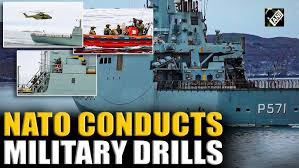
Military exercises play a crucial role in NATO’s Arctic strategy. These exercises test readiness, improve interoperability, and demonstrate collective resolve.
Cold-weather training is particularly important. Operating in Arctic conditions requires specialized skills, from survival techniques to equipment maintenance in subzero temperatures.
Joint exercises bring together land, air, naval, and cyber forces, reflecting the multidomain nature of modern warfare. They also involve civilian authorities, reinforcing coordination for emergency response and crisis management.
By conducting regular exercises in the Arctic, NATO ensures that its forces remain capable, adaptable, and credible.
Maritime Security in Arctic Waters
Arctic maritime security is a growing concern as sea routes become more accessible. Increased shipping activity raises the stakes for navigation safety, search and rescue operations, and environmental protection.
NATO’s maritime strategy emphasizes freedom of navigation and respect for international law. Allied naval forces conduct patrols, share information, and enhance coordination to ensure safe and secure waterways.
Maritime awareness is supported by advanced technologies such as satellite monitoring, unmanned systems, and real-time data sharing. These tools improve the ability to track vessels and respond quickly to incidents.
Protecting Arctic sea lanes is not only a security imperative but also an economic one, as global trade increasingly depends on reliable maritime routes.
Airspace Control and Early Warning Capabilities
Control of Arctic airspace is vital for early warning and deterrence. The region lies along strategic flight paths for long-range aircraft and missile trajectories.
NATO invests heavily in air surveillance systems, radar networks, and command-and-control capabilities to monitor activity in the High North. Integrated air and missile defense enhances the alliance’s ability to detect and respond to potential threats.
Regular air patrols and joint training missions reinforce readiness and interoperability. These efforts ensure that NATO maintains a robust defensive posture while minimizing the risk of miscalculation.
Undersea Security and Strategic Deterrence
The Arctic’s undersea domain holds immense strategic significance. Submarine operations, undersea cables, and seabed infrastructure are critical to military and economic security.
NATO prioritizes the protection of undersea communication networks, which support global data flows and military command systems. Disruption of these assets could have far-reaching consequences.
Advances in undersea surveillance and anti-submarine warfare enhance NATO’s ability to detect and deter hostile activity. Cooperation among allies is essential, given the vastness and complexity of the Arctic maritime environment.
Technology and Innovation in Arctic Operations
Technology is a force multiplier for NATO’s Arctic missions. Innovations in satellite communications, autonomous systems, and data analytics improve operational effectiveness in challenging conditions.
Unmanned aerial and maritime systems extend surveillance reach while reducing risk to personnel. Advanced sensors enable persistent monitoring despite extreme weather and limited daylight.
NATO also invests in cold-weather equipment and infrastructure, ensuring that forces can operate safely and efficiently. Research and development partnerships accelerate innovation and promote shared technological standards NATO Advances Arctic Security Amid .
Cybersecurity and Space Dimensions in the Arctic
Modern Arctic security extends beyond physical domains. Cybersecurity and space capabilities are integral to NATO’s strategic approach.
Cyber threats targeting Arctic infrastructure, such as energy facilities and communication networks, pose serious risks. NATO enhances cyber resilience through information sharing, joint exercises, and coordinated response mechanisms.
Space assets support navigation, communication, and surveillance in the Arctic. Protecting these capabilities is essential for maintaining situational awareness and operational continuity.
By integrating cyber and space considerations into Arctic planning, NATO addresses the full spectrum of modern security challenges.
Balancing Deterrence and Dialogue
While NATO advances Arctic security, it also emphasizes the importance of avoiding escalation. The Arctic has traditionally been a region of cooperation, and preserving stability remains a priority.
Confidence-building measures, transparency, and adherence to international norms reduce the risk of misunderstandings. NATO supports mechanisms that promote communication and crisis management.
This balanced approach reflects an understanding that security is best maintained through strength combined with restraint.
The Role of Partnerships Beyond NATO
Arctic security is not solely a NATO issue. Cooperation with partner countries and international organizations enhances regional stability. These partnerships reinforce trust and promote common standards.
Multilateral engagement ensures that Arctic governance remains inclusive and rule based, even as strategic competition intensifies.
Indigenous Communities and Human Security
Human security is an often-overlooked aspect of Arctic strategy. Indigenous communities are directly affected by environmental change, economic development, and security policies.
NATO recognizes the importance of respecting indigenous rights and incorporating local knowledge into planning. Sustainable development and community resilience contribute to long-term stability.
By acknowledging the human dimension of security, NATO reinforces its commitment to values-based defense NATO Advances Arctic Security Amid .
Economic Security and Critical Infrastructure
Economic activity in the Arctic is expanding, increasing the importance of protecting critical infrastructure. Energy facilities, ports, and communication networks are vital to regional and global economies.
NATO’s strategic missions include safeguarding these assets against physical and cyber threats. Resilient infrastructure enhances deterrence and ensures continuity during crises.
Public-private cooperation plays a key role, as many critical assets are owned or operated by civilian entities.
Legal Frameworks and International Norms
International law underpins stability in the Arctic. Respect for maritime law, sovereignty, and environmental agreements reduces the risk of conflict.
NATO supports a rules-based order that promotes peaceful cooperation and responsible behavior. Upholding legal frameworks strengthens legitimacy and predictability in the region.
This commitment aligns with NATO’s broader mission to defend democratic values and international norms.
Future Challenges in Arctic Security
The Arctic’s future will be shaped by intersecting trends: climate change, technological innovation, and geopolitical competition. These dynamics create uncertainty and demand proactive planning.
Continuous assessment, strategic foresight, and allied unity will be essential for navigating these complexities.
NATO’s Long Term Vision for the Arctic
NATO’s vision for the Arctic emphasizes stability, resilience, and cooperation. By advancing security and strategic missions, the alliance seeks to prevent conflict and preserve the region as a zone of low tension.
Long-term success depends on sustained political commitment, investment in capabilities, and engagement with partners. NATO’s adaptability will determine its effectiveness in addressing future challenges.
The Arctic as a Pillar of Global Security
As the Arctic transforms, NATO advances Arctic security and strategic missions to safeguard collective defense and global stability. The region’s strategic importance demands attention, innovation, and cooperation NATO Advances Arctic Security Amid .
Through deterrence, readiness, and respect for international norms, NATO reinforces its role as a stabilizing force in the High North. By integrating environmental, technological, and human considerations, the alliance adopts a comprehensive approach to security.
In an era of uncertainty, NATO’s Arctic strategy reflects a broader commitment to protecting peace, prosperity, and shared values across the transatlantic community.