






AI Regulation Battle
Introduction
Artificial intelligence has become one of the most transformative technologies in human history AI Regulation Battle. It is reshaping industries economies governments and societies at an extraordinary pace. From healthcare and education to finance manufacturing and national security artificial intelligence is now influencing nearly every aspect of modern life. As AI capabilities continue expanding governments around the world are facing a critical challenge. How should artificial intelligence be regulated without slowing innovation and economic growth
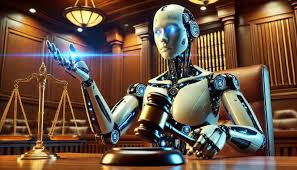
The debate over AI regulation has become one of the most important global issues of the decade. Policymakers technology companies researchers and civil society organizations are engaged in an intense battle over the future rules governing artificial intelligence. Supporters of strong regulation argue that AI poses significant risks including misinformation privacy violations job displacement and security threats. Others warn that excessive regulation could hinder innovation reduce competitiveness and limit technological progress.
The AI regulation battle is not simply a legal discussion. It is a contest over economic leadership national security technological dominance and the future relationship between humans and machines. Countries are racing to establish regulatory frameworks while also competing for leadership in the global AI economy.
As artificial intelligence becomes increasingly powerful the decisions made today will shape the future of technology society and global governance for generations. Understanding the AI regulation battle is therefore essential for businesses governments and individuals seeking to navigate the rapidly evolving digital age.
The Rise Of Artificial Intelligence
Artificial intelligence has advanced dramatically during recent years. Machine learning natural language processing computer vision and generative AI technologies have transformed what computers can accomplish.
AI systems can now analyze vast amounts of information generate content recognize images translate languages and perform complex problem solving tasks. Businesses are integrating AI into customer service healthcare logistics marketing and countless other sectors.
The rapid development of generative AI has accelerated public interest and concern. AI tools are capable of creating text images video and software code with remarkable accuracy and speed.
Governments recognize that artificial intelligence could become one of the most important economic drivers of the twenty first century. Nations investing heavily in AI research and infrastructure hope to gain strategic advantages in global competition.
At the same time the unprecedented capabilities of AI have raised questions about accountability transparency and public safety. These concerns have fueled demands for stronger regulation AI Regulation Battle.
Why AI Regulation Matters
Regulation exists to protect society from potential harms while allowing beneficial innovation to flourish. Artificial intelligence presents unique challenges because of its speed complexity and widespread impact.
AI systems influence decisions involving employment healthcare education criminal justice and financial services. Errors or biases in these systems can affect millions of people.
Without oversight companies may deploy AI technologies that create risks to privacy fairness and public trust. Governments therefore face pressure to establish rules that ensure responsible development.
Regulation can also provide clarity for businesses by defining acceptable practices and compliance standards. Clear regulations reduce uncertainty and encourage responsible investment.
However creating effective AI regulations is difficult because technology evolves faster than traditional legal systems. Policymakers must balance innovation with protection while avoiding unintended consequences.
The challenge lies in developing frameworks that remain relevant as AI capabilities continue advancing.
Global Competition For AI Leadership
Artificial intelligence has become a strategic priority for major world powers. Nations view AI as a key driver of economic growth military capability and technological influence.
The United States remains a global leader in AI innovation due to its technology sector research institutions and investment ecosystem. Many of the world’s most influential AI companies are based in America.
China has invested heavily in artificial intelligence through government initiatives research programs and industrial development strategies. Chinese leaders view AI as essential for future economic and geopolitical competitiveness.
European countries focus strongly on ethical AI development privacy protection and regulatory oversight. European policymakers seek to balance innovation with human rights and social responsibility.
Other nations including India Japan South Korea and several Middle Eastern countries are also expanding AI capabilities and regulatory efforts.
Competition for AI leadership is shaping international relations and influencing the regulatory approaches adopted by different governments AI Regulation Battle.
Privacy And Data Protection Concerns
Artificial intelligence relies heavily on data. AI systems require massive amounts of information to learn identify patterns and improve performance.
This dependence on data raises significant privacy concerns. Personal information including browsing history medical records financial data and online activity may be used to train AI systems.
Many individuals worry about how their information is collected stored and utilized. Questions about consent transparency and data ownership remain central to AI policy discussions.
Governments are increasingly introducing data protection regulations designed to safeguard personal information and limit misuse.
Businesses developing AI technologies must navigate complex legal requirements related to privacy compliance and cybersecurity.
Public trust in artificial intelligence depends largely on confidence that personal data is handled responsibly and securely.
Bias And Fairness In AI Systems
One of the most debated aspects of AI regulation involves algorithmic bias. AI systems learn from historical data which may contain existing social biases and inequalities.
Biased AI systems can produce unfair outcomes in hiring lending healthcare law enforcement and education. Such outcomes may disproportionately affect specific groups and communities.
Researchers continue studying methods to identify reduce and prevent algorithmic bias. Transparency and independent audits are increasingly viewed as important safeguards.
Governments are considering regulations requiring companies to evaluate AI systems for fairness before deployment.
Addressing bias is essential for ensuring that artificial intelligence supports equal opportunity and social trust.
The challenge is creating standards that promote fairness without limiting technological innovation AI Regulation Battle.
Misinformation And AI Generated Content
Generative AI has introduced new concerns regarding misinformation and digital manipulation. AI systems can create realistic text images audio recordings and videos that may be difficult to distinguish from authentic content.
Deepfakes and synthetic media have the potential to influence elections damage reputations and spread false information.
Governments are exploring regulations requiring disclosure of AI generated content and stronger penalties for malicious misuse.
Technology companies are developing tools to detect synthetic media and improve content verification.
The rise of AI generated misinformation presents significant challenges for democracy journalism and public trust.
Regulators must determine how to combat harmful content while preserving freedom of expression and innovation AI Regulation Battle.
Employment And Workforce Transformation
Artificial intelligence is transforming labor markets across the world. Automation and AI driven systems can perform tasks previously handled by human workers.
Some jobs may disappear while new opportunities emerge in technology development data analysis and AI management.
Workers in sectors such as customer service transportation manufacturing and administration face increasing disruption.
Governments are examining policies related to workforce retraining education and social protection to address AI driven economic changes.
Business leaders argue that AI can increase productivity and create new industries. Critics worry about inequality and job displacement.
Effective regulation may help ensure that economic benefits are shared broadly across society AI Regulation Battle.
AI In Healthcare
Healthcare represents one of the most promising applications of artificial intelligence. AI systems assist with diagnosis medical imaging drug discovery and patient management.
Advanced algorithms can identify diseases earlier improve treatment planning and enhance healthcare efficiency.
However healthcare AI also raises important ethical and regulatory questions. Medical decisions require accuracy accountability and patient trust.
Regulators must ensure that AI systems meet rigorous safety standards before being used in clinical environments.
Privacy protection is especially important because healthcare data is highly sensitive.
The successful integration of AI into healthcare depends on strong governance and transparent oversight.
National Security And Defense Applications
Artificial intelligence is becoming increasingly important in military and national security strategies.
AI supports intelligence analysis cybersecurity surveillance logistics and autonomous systems.
Government’s view AI as a critical technology for future defense capabilities. Military applications create both opportunities and risks.
Autonomous weapons systems have become a major area of concern. Critics argue that machines should never make life and death decisions without human oversight.
International discussions continue regarding rules governing military AI development and deployment.
Balancing national security interests with ethical responsibilities remains a complex challenge.
Cybersecurity And AI Risks
Artificial intelligence is changing the cybersecurity landscape. AI can improve threat detection identify vulnerabilities and strengthen digital defenses.
At the same time cybercriminals can use AI to develop more sophisticated attacks. Automated phishing malware generation and social engineering campaigns are becoming increasingly advanced.
Governments and businesses are investing heavily in AI powered security solutions AI Regulation Battle.
Regulation may require organizations to implement stronger cybersecurity measures when deploying AI systems.
Protecting critical infrastructure financial systems and public services is becoming a central focus of AI governance.
Cybersecurity concerns highlight the need for international cooperation and information sharing.
The European Approach To AI Regulation
Europe has emerged as a leading advocate for comprehensive AI regulation. European policymakers emphasize human rights transparency and accountability.
The European approach seeks to classify AI systems according to risk levels. Higher risk applications face stricter oversight and compliance requirements.
Supporters argue that this framework promotes responsible innovation and public trust.
Critics warn that excessive regulation could reduce competitiveness and slow technological development.
Europe aims to become a global model for ethical AI governance while maintaining innovation and economic growth.
The success of this approach will influence regulatory debates worldwide.
The United States Perspective
The United States generally favors a more innovation focused approach to AI regulation.
American policymakers recognize the importance of maintaining technological leadership and economic competitiveness.
Rather than imposing broad restrictions many proposals focus on targeted regulation addressing specific risks such as privacy discrimination and national security.
Technology companies play a major role in shaping policy discussions through research investment and public engagement.
Debates continue regarding the appropriate balance between government oversight and private sector flexibility.
The American approach will significantly influence global AI development due to the country’s technological leadership.
The Chinese Model
China views artificial intelligence as a strategic national priority. Government support for AI development is integrated into broader economic and industrial policies.
Chinese regulations emphasize security social stability and state oversight while encouraging technological advancement.
The country has developed extensive AI capabilities across sectors including finance transportation healthcare and public administration.
International observers closely monitor Chinese regulatory approaches because of their potential global influence.
The Chinese model demonstrates how governments can promote rapid technological growth while maintaining strong oversight mechanisms.
Differences between regulatory systems contribute to the broader global competition surrounding AI governance.
Ethical Challenges In Artificial Intelligence
Artificial intelligence raises profound ethical questions about autonomy accountability and human values.
Who should be responsible when an AI system causes harm
How should societies balance efficiency with fairness
What rights should individuals have regarding decisions made by algorithms
These questions have no simple answers. Ethical frameworks are becoming increasingly important in AI policy development.
Many organizations have established ethical guidelines emphasizing transparency accountability privacy and human oversight.
Ethical considerations will continue shaping the future of AI regulation as technology becomes more powerful.
Innovation Versus Regulation Debate
The central conflict in the AI regulation battle involves balancing innovation with protection.
Technology companies often argue that excessive regulation could slow research discourage investment and reduce competitiveness.
Consumer advocates and civil society organizations emphasize the need for safeguards against misuse and unintended consequences.
Governments must navigate these competing priorities while responding to rapid technological change.
Effective regulation should encourage innovation while protecting public interests.
Finding the right balance remains one of the most difficult policy challenges of the digital era AI Regulation Battle.

Future Of AI Governance
The future of AI governance will likely involve a combination of national regulations international cooperation and industry standards.
Global coordination may become necessary because AI technologies operate across borders and affect multiple jurisdictions.
International organizations governments businesses and researchers are increasingly collaborating on best practices and regulatory frameworks.
Adaptive regulation will be important because AI capabilities continue evolving rapidly.
Future policies may focus on transparency safety testing accountability and human centered design principles.
The success of AI governance will influence economic growth social stability and technological progress worldwide.
AI And The Global Economy
Artificial intelligence is expected to contribute trillions of dollars to the global economy over coming decades.
Businesses using AI can improve efficiency reduce costs and create innovative products and services.
Countries leading in AI development may gain substantial economic advantages through productivity growth and technological exports.
Regulatory decisions will influence investment patterns market competitiveness and international trade.
The AI economy is becoming a major factor in global economic strategy and development planning.
Ensuring that economic benefits are broadly distributed remains an important policy objective AI Regulation Battle.
Artificial Intelligence
The AI Regulation Battle is one of the defining issues of the modern technological era. Artificial intelligence offers extraordinary opportunities for innovation economic growth healthcare improvement and scientific advancement.
At the same time AI presents significant challenges related to privacy bias misinformation employment cybersecurity and national security.
Governments around the world are racing to develop regulatory frameworks that protect society while encouraging innovation. Different countries are adopting different approaches reflecting their political systems economic priorities and strategic interests.
The outcome of this regulatory battle will shape the future of technology and its role in human society. Effective governance requires cooperation between policymakers businesses researchers and citizens AI Regulation Battle.
Artificial intelligence is transforming the world faster than any previous technological revolution. The decisions made today regarding regulation ethics and accountability will determine whether AI becomes a force for shared prosperity and progress or a source of new risks and divisions.
The future of artificial intelligence depends not only on technological innovation but also on the wisdom and responsibility with which humanity chooses to govern it.
Related Articl:
NATO Security Shift in Europe Now