


This tragic loss of life comes at a fraught moment world powers are pushing renewed diplomatic efforts to end the conflict.
Below, a detailed look at the attack, reaction, and the wider stakes and why the bloodshed continues even as negotiations intensify .
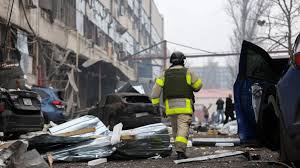
On December 1, 2025, tragedy struck the Ukrainian city of Dnipro. A Russian ballistic missile slammed into an industrial zone in the city’s heart, killing four people and wounding dozens. The strike came at a moment of renewed diplomatic activity while emissaries and negotiators gathered across capitals, pursuing what many hoped might become a turning point in the ongoing war. The stark contrast between the push for peace and the unfolding human suffering exposes a bitter reality for many Ukrainians, war and diplomacy continue in parallel.
The Attack What Happened in Dnipro
In short four lives lost, dozens wounded, and a city left reeling even as the world watches diplomacy in motion.
For many residents, repeated shelling and strikes have shattered any expectation that “some parts of Ukraine are safe.” The constant threat even far from the active battlefront undermines reconstruction, discourages displaced people from returning, and saps morale. What once may have seemed like a “temporary disruption” is now a chronic risk, woven into the fabric of daily life.
The economic toll has already grown heavy. Small business owners are left with destroyed assets, mechanics lose their repair shops, workers lose wages, and the local economy suffers. Over time, these attacks degrade economic resilience, degrade public trust, and make long-term recovery more precarious.
Diplomacy in Motion Talks, Tensions and the Push for Peace Four Dead in Dnipro as Ukraine Peace Talks Advance
On the one hand, the strike underlines the urgency of a settlement. Civilians continue to die, and every day of continued conflict deepens trauma, destruction, and human cost. For negotiators, such events add moral weight to appeals for peace: they show what’s at stake.
On the other hand, the violence especially strikes on civilian zones complicates diplomatic efforts. It hardens public opinion, sharpens demands for justice, and may make compromise more politically risky. For Kyiv’s leadership, balancing pressure for peace with the need to maintain legitimacy among citizens wounded and enraged by attacks becomes a tightrope walk.
Participants in peace talks must now factor in the human dimension more carefully. Any agreement that fails to guarantee civilian protection, reconstruction aid, or security assurances risks being rejected by a traumatised populace.
Despite the violence, international diplomatic efforts continue. On the same day as the Dnipro strike:
The Human Cost Civilian Toll and Widening Destruction Four Dead in Dnipro as Ukraine Peace Talks Advance
The Dnipro strike isn’t an isolated incident but part of a broader, devastating landscape of civilian suffering. Consider these sobering facts Four Dead in Dnipro as Ukraine Peace Talks Advance.
Every missile strike deepens the humanitarian crisis, complicating relief efforts, fracturing communities, and undermining trust in the possibility of peace without substantial justice and reconstruction.
Why the Violence Continues Even During Peace Talks
At first glance, it might seem paradoxical diplomacy ramps up, but bombs keep falling. Several factors help explain this grim dissonance:
- Leverage through violence Ongoing attacks give attackers bargaining power. By continuing strikes even as negotiations proceed, aggressors signal that military force remains central, making peace talks more coercive than conciliatory.
- Uncertain negotiations and shifting terms With new proposals, revisions, and high-stakes demands (especially around territorial sovereignty), each side is testing the waters. In such an environment, attacks may be used to influence public opinion, harden negotiating positions, or pressure the opponent Four Dead in Dnipro as Ukraine Peace Talks Advance.
- Fragmented power structures In wars of this scale, not all actors may be under tight centralised control. Militant units or military wings may operate independently meaning even if leaders pursue peace, local commanders might continue fighting.
- Distrust and fear of vulnerability Ukraine’s leadership and population are acutely aware that any peace deal might leave them exposed if Russia violates terms. Continued strikes reinforce that fear, and complicate concessions.
- Psychological warfare and intimidation Civilian attacks spread fear, break morale, create displacement, and wear down resistance. That in turn can undermine public will to sustain prolonged conflict or negotiations.
Thus, violence persists not because diplomacy fails alone but because war is seen as a bargaining chip, a pressure mechanism, and a tool for shaping both battlefield and political outcomes.
The Stakes What Peace or Continued War Means for Ukraine and the World
What’s at risk is immense:
- For Ukraine, a sustainable peace means saving lives, preserving sovereignty, rebuilding infrastructure, and healing widespread trauma. Failure risks further civilian casualties, prolonged displacement, a shattered economy, and deep societal scars.
- For Europe and the world, the conflict has global ramifications: refugees, energy insecurity, economic disruption, strategic instability, and the danger of wider escalation. A stable resolution would ease these pressures.
- For global norms and human rights, how this war ends sets precedent. Diplomacy without accountability could embolden aggression elsewhere. But justice and protection of civilian lives could reinforce international order Four Dead in Dnipro as Ukraine Peace Talks Advance.
Each side’s actions in boardrooms or battlefields will shape not just the fate of Ukraine, but the future of international conflict resolution.
Civilian Casualties From Numbers to Lives
It’s easy to read “four dead, 40 injured” as a statistic. But behind those numbers are lives disrupted, families shattered, businesses ruined, and a city shaken.
Think of the mechanic whose car-repair shop collapsed under metal and concrete the spouse waiting at home, children whose futures are now uncertain. Think of the clerk whose desk was destroyed, the office worker scrambling to find new work, the shop owner watching his livelihood burn. For each injured person, there are months of recovery, medical bills, lost wages, and psychological trauma. For those who died the permanent absence, grief. And the burden on families.
For communities already under strain after years of war, each attack deepens despair. Displacement, uncertainty, fear of another strike all weigh on mental health, social cohesion, and hope.
And for Ukraine as a whole, civilian casualties like those in Dnipro raise profound questions about what kind of peace is acceptable. Can peace be genuine if cities remain under threat of missile strikes? Will reconstruction ever be safe enough for people to return?
Military Strategy vs. Humanitarian Reality
From a strictly military vantage point, striking industrial zones and logistics hubs may serve strategic purposes: degrade repair, reduce mobility, disrupt supply lines, and impose pressure on defence capacities. But such strikes carry inevitable human cost when they hit civilian areas and that cost reverberates beyond immediate casualties.
Missile strikes on cities like Dnipro blur the line between combat zones and civilian life. That is not just tragic it complicates the very logic of conflict. For defenders, eroded infrastructure and damaged cities undermine military logistics, morale, and civilian support. For attackers, international condemnation, increased pressure for war crimes investigations, and risk of galvanised resistance emerge.
In a war where diplomacy is again seeking ground, attacks like the one in Dnipro risk derailing fragile negotiations, hardening resolve, fuelling anger and fear, and making compromise more elusive.
For any peace agreement to endure not just in formal declarations, but in reality it must address more than ceasefire lines. It should include:
- Security guarantees for Ukraine so that communities like Dnipro can feel protected, not constantly threatened.
- Civilian protection mechanisms rules and enforcement to prevent missile strikes on urban zones; air-defence, early-warning systems, civilian shelters.
- Reconstruction and aid packages support for rebuilding destroyed homes, businesses, infrastructure; assistance to families who lost livelihoods; investments to revive local economies.
- Justice and accountability mechanisms documentation of attacks, investigations, war crime procedures, reparations or compensation for victims and families.
- Inclusion of local voices input from mayors, local governments, civil society, community leaders. Peace that ignores the human and social dimension is unlikely to be stable.
Only with such comprehensive approach can a deal transcend the brittle ceasefire and begin laying foundations for a durable peace.
Politics, Public Opinion, and the Emotional Toll
Within Ukraine, strikes like the Dnipro attack have immediate political implications. They can influence public opinion, shape electoral debates, and intensify calls for strong leadership. Citizens grieving family members or neighbours may demand tougher resistance, reject concessions, or demand maximum security and reparations.
On the other hand, war weariness, fear, and economic hardship may push others toward favouring compromise, even painful ones, if they see a realistic path toward peace and safety for families.
For political leaders, this dynamic is dangerous. A deal perceived as “selling out” might provoke outrage; yet, constant war, destruction, and mounting civilian casualties may erode support for prolonged conflict.
International actors also face reputational and moral pressure. Foreign mediators and guarantors may be asked to do more not just broker ceasefires, but help guarantee enforcement, deliver reconstruction funding, and hold perpetrators accountable.
Media, Narrative, and International Perception
Images of destroyed buildings, shell-shocked civilians, firefighters pulling bodies from rubble these are powerful. They shape public opinion worldwide, drive humanitarian appeals, influence foreign policy, and can shift the political cost of war for international actors.
In Dnipro’s case, media coverage of the attack highlights a fundamental contradiction: while talks proceed in diplomatic suites, real blood is spilled on streets and workplaces. This contradiction will matter for how any agreement is crafted and judged by the public, inside Ukraine and abroad.
Media narratives will likely pressure negotiators to include concrete protections for civilians. For international audiences, repeated stories of civilian casualties could increase support for stronger peace enforcement, more aid, or more active intervention.
The Long Road Ahead: Reconstruction, Healing, and the Test of Peace
Assuming diplomacy leads to a ceasefire or peace agreement, the damage done social, economic, psychological will not vanish with a handshake. Cities like Dnipro will need sustained assistance: rebuilding homes, restarting businesses, re-establishing infrastructure, supporting displaced people, restoring community trust.
That will require financing from international donors, reconstruction banks, humanitarian agencies and robust plans. It will also demand transparency: accountability for attacks, fair distribution of aid, prioritising communities most affected.
Local governance matters here. Mayors, regional administrations, community leaders they will be on the front lines of recovery. Engaging them directly in planning will help ensure that resources reach those who need them, and that rebuilding strengthens social ties rather than just rebuilding bricks.
Beyond reconstruction, there needs to be healing. Psychologically, socially, politically. Trauma, loss, fear these are wounds not easily healed. Support systems mental health care, community support networks, social solidarity will be as important as rebuilding walls.
What Peace Should And Should Not Look Like
A genuine peace ending this chapter of the war must do more than freeze front lines. It must:
- Guarantee security and safety for civilians even in formerly contested or bombed areas.
- Ensure accountability for unlawful strikes, especially those hitting civilian zones.
- Provide substantial reconstruction and economic support for damaged cities and communities.
- Offer transparent and inclusive political processes: involve local leaders, displaced populations, civil society in rebuilding and reconciliation.
- Build long-term resilience, not just temporary fixes: invest in infrastructure, social services, housing, mental-health support, and diversified economies.
What peace must not be is a superficial ceasefire a truce that leaves factories, infrastructure, and people’s lives destroyed, with no path to recovery or justice. That kind of “peace” risks being a thin veneer over deep wounds.
Why Dnipro Matters Locally, Nationally, Globally
The strike on Dnipro matters for many reasons:
- Locally it destroyed businesses, shattered families, traumatised communities, and deepened fear among citizens.
- Nationally it underscores how, even away from active battlefronts, ordinary cities remain vulnerable, complicating Ukraine’s war strategy, economy, and long-term stability.
- Globally it highlights the human cost of conflict, influencing foreign public opinion, shaping humanitarian aid decisions, and stressing the urgency of comprehensive peace.
Dnipro becomes emblematic of a broader dilemma can war weary nations and populations achieve peace that not only ends fighting, but rebuilds lives?
Challenges to Diplomacy And Why They Must Be Overcome
Several obstacles stand in the way of a stable, just peace agreement:
- Distrust and anger After repeated strikes, many Ukrainians may distrust any agreement that does not guarantee security and justice.
- Asymmetry of power The attacking party may believe it holds leverage, especially if it keeps launching strikes even while negotiating undermining trust.
- Political fragility Leadership changes, competing factions, internal pressure from victims’ families and war-weary citizens may destabilise agreements.
- International complexity Foreign powers offering mediation may have conflicting interests, making enforceable guarantees hard to secure.
- Reconstruction burden The scale of damage economically and socially will be enormous; funding, coordination, transparency will be critical and difficult.
Yet, if those challenges are met squarely if peace efforts incorporate humanitarian concerns, not just political expediency. There is a chance to turn a tragic moment like the Dnipro strike into a catalyst for serious, sustainable peace.
Conclusion A War Between Diplomacy and Destruction
The death of four people in Dnipro is a tragic symbol of a larger reality. A war where missiles fly even as diplomats talk.
It’s a grim paradox efforts to end the fighting advance, even as violence surges. But unless talks lead to concrete change, ceasefires, security guarantees, rebuilding. And accountability, every new strike risks eroding hope Four Dead in Dnipro as Ukraine Peace Talks Advance.
Ultimately, the question is not just. When guns go silent but whether. The world can agree on a peace that protects lives, restores dignity, and avoids repeating past mistakes.
Related Article :
Cyclone Ditwah and its Devastating Impact
The Influence of Social Media on Modern Communication