







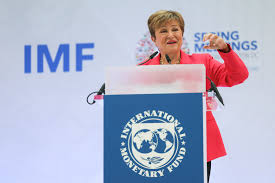
IMF to China Reform Now or Risk Slowdown
IMF to China Reform Now or Risk Slowdown A Deep Dive into the Global Economic Warning
The global economy is transitioning through one of the most complex phases of the 21st century. IMF to China Reform Now or Risk Slowdown. Slowing growth, geopolitical tensions, supply-chain restructuring, climate driven disruptions, and rising public debt have reshaped the economic order. In this environment, the performance of the world’s second largest economy China has become crucial to global stability. Recently, the International Monetary Fund (IMF) issued one of its strongest advisories to Beijing: implement deep structural reforms or risk prolonged economic slowdown.
The message is clear, sharp, and urgent. China, once the fastest-growing powerhouse driving global expansion, is confronting multiple internal and external pressures. The IMF believes that without decisive actions especially in consumption, property stabilisation, social safety nets, and market reforms—China may face long-term stagnation, with consequences extending far beyond its borders.
This article explores the IMF’s warning, the underlying economic challenges inside China, the geopolitical implications of its slowdown, and the global stakes in China’s next economic chapter.
Why the IMF’s Warning Matters IMF to China Reform Now or Risk Slowdown
For decades, China’s economic model delivered extraordinary results:
- Double digit GDP growth
- Massive infrastructure expansion
- Global manufacturing dominance
- The rise of hundreds of millions into the middle class
But the IMF argues that this model has reached its limits. The reliance on exports, investment driven growth, and state-supported enterprises has created imbalances. With demographic decline accelerating and productivity growth slowing, the IMF believes the time for incremental fixes is over.
The IMF’s core message IMF to China Reform Now or Risk Slowdown
The IMF’s advisory focuses on four pillars:
- Boost domestic consumption by improving household incomes and reducing precautionary savings.
- Stabilise the property market without reigniting speculative bubbles.
- Improve transparency and governance in state-owned enterprises (SOEs) to enhance productivity.
- Implement market-driven reforms that encourage innovation, competition, and capital allocation.
The warning comes amid global uncertainty, making China’s policy decisions even more consequential.
China’s Current Economic Landscape A Complex, Multi Layered Challenge
China’s economy has slowed significantly compared to previous decades. While growth is still positive, it is far below historical norms. Several structural issues have converged to produce this outcome.
The Property Market Crisis IMF to China Reform Now or Risk Slowdown
The property sector once accounting for more than a quarter of China’s GDP has weakened dramatically. Developers face liquidity crunches, unsold housing stock has surged, and buyer confidence has dropped.
Effects include:
- Lower household wealth
- Weak construction activity
- Local government revenue shortfalls
- Reduced investment in housing-related industries
The IMF warns that unless China resolves the deep-rooted structural issues in the property market, a prolonged slowdown could become unavoidable IMF to China Reform Now or Risk Slowdown.
Demographic Pressures
China is ageing faster than expected. The shrinking workforce means:
- Lower productivity
- Rising pension and healthcare costs
- Reduced consumer demand in the long run
The IMF stresses that productivity-focused reforms are necessary to counter demographic decline.
Export Driven Growth Is Losing Momentum
Global trade tensions, tariff challenges, and shifting supply chains have reduced China’s export dominance. Several multinational companies are diversifying manufacturing to Southeast Asia, India, and Mexico.
China needs a new growth engine one driven by domestic consumption rather than exports.
Rising Debt Risks
China’s debt landscape is complex:
- Local governments carry massive hidden debts
- State owned enterprises are heavily leveraged
- Developers face unprecedented financial strain
Without reform, debt accumulation could escalate into broader financial instability IMF to China Reform Now or Risk Slowdown.
What the IMF Believes China Must Do Next
The IMF’s recommendations are not simply criticisms they outline a road map intended to secure long-term growth and stability.
Strengthening Household Consumption
Chinese households save around double the rate of their Western counterparts. High savings reflect insecurity about:
- Healthcare
- Education
- Pensions
- Unemployment risks
To reduce precautionary savings, China must enhance its social safety net. This means improving:
- Public healthcare coverage
- Pension sustainability
- Social welfare accessibility
A stronger social system would encourage households to spend more, reducing reliance on investment led growth.
Deep Reform of SOEs
State-owned enterprises dominate key sectors but often operate inefficiently. The IMF suggests:
- Increasing private sector participation
- Imposing stronger performance criteria
- Enhancing transparency and governance
These changes would boost productivity and innovation.
Restoring Property Market Stability
Instead of launching another investment boom, the IMF encourages:
- Completing unfinished projects
- Reducing excess housing stock
- Transitioning to rental based housing models
- Ensuring financial stability without over-expansion
This is a delicate process requiring precise policy balancing.
Encouraging High Tech and Innovation Sectors
China’s ambitions in AI, semiconductors, electric vehicles, and green manufacturing are immense. However, innovation demands:
- Strong intellectual property protection
- A level playing field for private firms
- Global technology cooperation (which is strained)
The IMF recommends reforms that foster competition and reduce barriers for private innovators.
What Happens If China Does Not Implement Reforms
The IMF’s warning implies that failure to adapt could have long-term consequences.
Slow Growth Becoming Permanent
Economists fear China may enter a “middle income trap,” where growth stagnates before reaching advanced-economy status.
Rising Financial Instability
Local government debt, declining property values, and weak consumption could combine into a systemic risk.
Global Economic Repercussions
China contributes significantly to global growth. A slowdown would impact:
- Commodity exporters (Australia, Brazil, Gulf nations)
- Manufacturing supply chains in Asia
- European industrial exports
- Global inflation and interest rate cycles
The world cannot easily absorb a sharp deceleration in China.
China’s Response What Signals Are Emerging?
China has shown signs of acknowledging the challenges:
- Stimulus packages have been introduced
- Efforts to stabilise the housing sector are ongoing
- High-tech investment is accelerating
- Beijing has talked about increasing domestic consumption
However, the IMF believes bolder structural reforms are necessary, not just temporary stimulus.
Geopolitical Dimensions: Why China’s Economy Is Also a Global Strategic Issue
China’s economic trajectory shapes global geopolitics. Slowing growth and rising internal pressures may influence:
- Trade relationships
- Diplomatic partnerships
- Investments under the Belt and Road Initiative
- Military spending capability
- The US–China rivalry
A strong China shapes the world one way; a weakened China shapes it another.
Economic slowdown may lead to:
- More protectionism
- More industrial policy
- Increased geopolitical assertiveness
- Tighter control over capital and markets
This is why global institutions including the IMF are closely monitoring China’s decisions.
China’s Path Forward: Scenarios for the Next 10 Years
Scenario 1: Successful Reform and Stabilisation (Optimistic)
China implements the IMF’s recommendations:
- Consumption rises
- Debt becomes manageable
- Property markets stabilise
- Productivity increases
In this path, China reclaims strong, sustainable growth.
Scenario 2 Partial Reform, Slow Adjustment (Moderate)
Some reforms occur, but not enough to fully re balance the economy.
Growth stabilises around lower levels (3–4%), but vulnerabilities remain.
Scenario 3: Missed Reform Window, Structural Decline (Pessimistic)
China maintains the old model, avoiding tough reforms.
The result:
- Long term stagnation
- Rising financial risks
- Weakened global leadership
This is the outcome the IMF is warning against.
Why the World Needs a Stable and Reformed Chinese Economy
No major economy functions in isolation anymore. China is deeply integrated into global finance, energy markets, technology, and trade.
A stable, reformed China benefits the world by:
- Maintaining global demand
- Supporting supply-chain resilience
- Reducing geopolitical tensions
- Advancing global climate goals
- Preventing financial contagion
China’s choices in the coming years will reshape global economic, political, and technological landscapes.
Watch Now
Conclusion A Moment That Will Define the Future
The IMF’s message to China “Reform Now or Risk Slowdown” is more than a warning. It is a call for transformation at a historic crossroad. China can choose between two paths:
A future of sustainable growth driven by innovation, consumption, and structural reform,
or
A prolonged slowdown defined by stagnation, demographic decline, and rising debt risks.
The decisions made today in Beijing will not only shape China’s next decade but also determine the direction of the global economy. The world is watching, financial markets are analysing , and policymakers are preparing because China’s next steps may become one of the most consequential economic stories of our time.