



.Indian Tejas Fighter Jet Crashes at Dubai Airshow Pilot Killed, Questions Raised
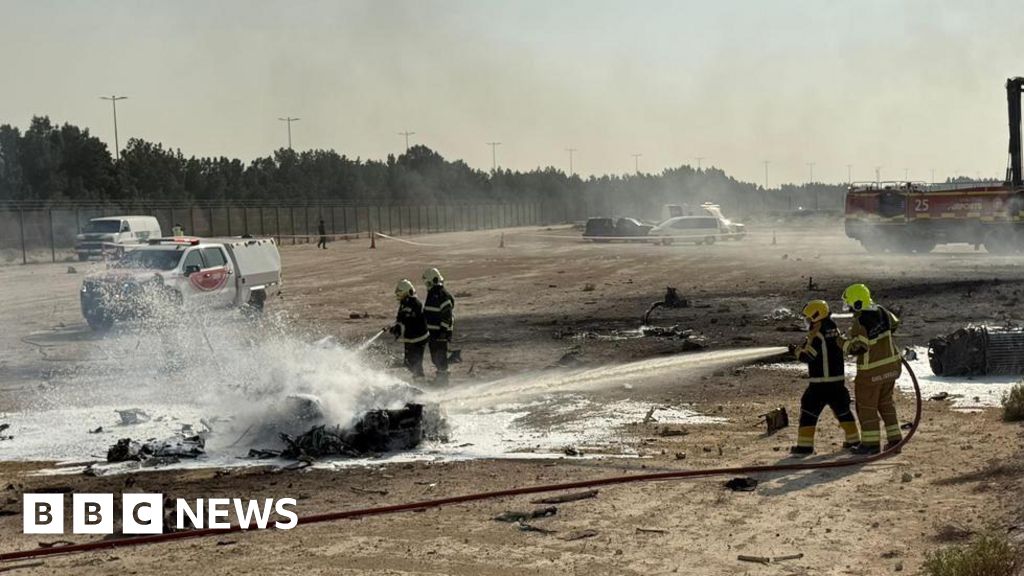
On 21 November 2025, a demonstration flight at the Dubai Airshow ended in tragedy. When an Indian HAL Tejas Light Combat Aircraft (LCA) crashed during an aerobatic display at Al Maktoum International Airport. The sole occupant Wing Commander Namansh Syal of the Indian Air Force was killed. The aircraft impacted the ground in front of stunned spectators. And erupted into a fireball, sending thick black smoke across the airfield. The Indian Air Force (IAF) immediately announced the loss. And said a court of inquiry would determine the cause of the accident.
This event has several immediate and longer term consequences. Grief for the family and the IAF community, urgent technical. And safety questions about the Tejas program, scrutiny of aerobatic display procedures. Implications for India’s defence exports. The reputation of its indigenous aviation industry. This article examines the crash timeline, the Tejas program’s background, initial reactions and technical clues. The investigative path forward, and the broader political and industrial implications. Sources include front line reporting and official statements from the IAF, Hindustan Aeronautics Limited (HAL), and international media.
What happened a clear but distressing sequence of events
Eyewitness footage and media reports show the Tejas conducting low altitude display passes over the Dubai Airshow. Observers described the jet completing multiple circuits before entering. A negative G turn or a rapid descending manner, failing to recover altitude, and then striking the ground within the display area. The aircraft burst into flames on impact; firefighting crews were on scene quickly. But the pilot did not survive. Organisers halted some activity briefly, then resumed displays a short while later after emergency teams declared the situation contained.
The IAF confirmed in a statement that an aircraft had “met with an accident during an aerial display” and that the pilot had sustained fatal injuries; it also announced formation of a court of inquiry to investigate the cause. HAL, the aircraft manufacturer, said the crash was an “isolated occurrence” and pledged support for the investigation, while General Electric (GE), the engine supplier, said it was ready to assist authorities.
Multiple news outlets reported the pilot’s identity as Wing Commander Namansh Syal and covered the subsequent repatriation and funeral arrangements. Coverage included powerful human-interest pieces about the grief of family and colleagues.
The Tejas program: significance, history, and recent context
The HAL Tejas is India’s first endogenously designed light combat aircraft and a central piece of New Delhi’s long-term effort to develop a domestic fighter industry and reduce dependence on foreign platforms. The Light Combat Aircraft program began decades ago and the Tejas has had a protracted development and testing period before limited induction into the IAF. In recent years, it has emerged as a flagship “Make in India” defence product and a candidate for export to several countries.
Despite its strategic importance, the Tejas has faced developmental challenges from delays and cost escalations to technical teething problems common to new aircraft programs. The jet is powered by a U.S. supplied General Electric engine and features a digital fly-by-wire system, delta wing design, and modern avionics. The aircraft had previously been involved in at least one other accident during exercises, which has been part of the public debate around the platform’s reliability.
Before the Dubai crash, India had also signed contracts for additional Tejas aircraft for its own fleet and actively marketed the jet abroad. That commercial push makes any accident at an international airshow especially sensitive for reputational reasons.
The pilot: service, sacrifice and public reaction
Wing Commander Namansh Syal (age reported in media as in his 30s) was a decorated IAF officer married to an IAF officer; the human side of the story has dominated domestic coverage. Heartfelt tributes from colleagues and public officials poured in after the crash. His funeral and repatriation were widely reported in India, and the emotional images of family members saying farewell were shared across Indian and international outlets. The IAF and government publicly expressed condolences and vowed an inquiry.
Early technical clues and rumours separate signal from noise
Immediately after the crash, social media circulated video and images that prompted speculation about a pre existing technical issue. Some posts alleged there was an oil or fluid leak before the flight; others suggested engine or flight-control failure. Indian authorities and official channels pushed back on some of those claims, saying footage of fluid was part of routine pre flight draining/condensation management and not evidence of a critical malfunction. Still, conversations about possible causes—from pilot disorientation and negative-G recovery failure to mechanical or engine faults began almost instantly.
Analysts and aviation specialists caution against jumping to conclusions from video alone; investigators typically rely on flight data recorders (FDR), cockpit voice recorders (CVR), mission computers, engine monitoring logs, maintenance histories, and interviews with ground crews. In this case, both Indian and Emirati teams were reported to be cooperating to recover onboard data and wreckage fragments to reconstruct the sequence of events.
What investigators will look for
A formal court of inquiry and cross-jurisdictional teams will typically pursue a standard set of investigative priorities:
Data recovery: Extracting FDR and ECAM/engine monitoring information to see control inputs, system warnings, and engine performance parameters in the seconds and minutes before the crash.
Structural and systems examination: Checking for pre-existing damage, maintenance records, and signs of structural failure or system anomalies.
Pilot actions and human factors: Reconstructing the flight path, manoeuvre profile, and whether any physiological or situational factors (e.g., spatial disorientation, G-induced loss of consciousness, or incorrect control inputs) played a role.
Environmental/contextual factors: Assessing weather, visibility, runway and display-area layout, and whether any external hazards influenced the flight.
Operational decisions: Reviewing whether the chosen display routine, altitude margins, and emergency protocols were consistent with safety norms for demonstration flights.
Investigations can take weeks to months, and public updates are usually limited to broad findings until a formal report is issued. In high-profile cases involving defence platforms, sensitivity can increase the political and media scrutiny around every interim statement.
Safety at airshows: risk, precedent and procedures
Aerobatic displays are inherently risky: aircraft perform dynamic, energy-intensive maneuvers in constrained airspace and low altitudes, often close to spectators. Organisers typically follow strict safety protocols—display boxes (predetermined air volumes), minimum altitudes for certain maneuvers, emergency response planning, and pre-flight checks. But even with precautions, accidents have occurred historically at international airshows, sometimes with civilian performers and sometimes with military demonstration teams.
The decision to continue an airshow after a crash is controversial but not unprecedented. Organisers often consult emergency services and safety officers; if the threat is contained, events may resume. Critics argue that continuing while investigations are still underway can appear callous; supporters of rapid resumption point to crowd control, logistical reasons, and the need to let emergency services complete their work. Dubai Airshow organisers issued statements explaining the resumption after a temporary halt while authorities managed the situation.
The political and reputational fallout — export ambitions and industrial stakes
The Tejas program is not just a military asset but a symbol of India’s defence industrialisation ambitions. Demonstrating the aircraft at a major global event like the Dubai Airshow is part of export marketing efforts. An accident at such an event carries reputational consequences that can influence prospective buyers, risk assessments, and political decision-making in buyer countries. HAL’s swift public statements framing the crash as an isolated occurrence and its pledge to cooperate with inquiries reflect an awareness of commercial and strategic stakes.
However, industry observers also caution that a single accident—once properly investigated and understood—does not automatically nullify a platform’s ex portability. Many aircraft types had early mishaps during development before achieving operational maturity. What matters for customers are the transparency of the investigation, remedial actions taken, and long-term safety metrics. If the inquiry points to a maintenance lapse or procedural error rather than a systemic design flaw, the commercial impact may contained. Conversely, a structural or recurring systems issue would more dam.
Media narratives and the online information environment
The crash illustrated the modern media environment where raw videos, social posts, and hot takes spread rapidly. That rapid sharing can aid transparency but also fuel misinformation. For instance, early clips of fluid being drained from a parked Tejas were circulated out of context. Later clarified official channels as a routine pre flight drainage rather. Than evidence of a critical leak. Government agencies and the IAF pushed back against. What they termed false narratives. Investigators and credible outlets urged patience until technical analysis could confirm causes.
Historical perspective: accidents in display flying
History shows that display flying whether performed national aerobatic teams, individual demonstration pilots, or experimental platforms has seen fatal and non fatal accidents across decades. Many of these incidents led to improved safety measures: revised display boxes, stricter minimum altitudes, enhanced ejection-system training, and better maintenance and oversight. Each tragic event typically triggers safety reviews and procedural reforms designed to reduce recurrence risk. The aviation community generally treats airshow accidents as painful but instructive episodes in the ongoing pursuit of safer operations.
Conclusion grief, accountability, and the path forward
The fatal crash of a Tejas at the Dubai Airshow is a human tragedy that also intersects with broader technical, industrial, and reputational questions. Wing Commander Namansh Syal’s death has widely mourned, while the Tejas program now faces intense scrutiny. The forthcoming court of inquiry will closely watched: transparent, technical findings and prompt remedial measures will crucial not only for the family and the IAF but for India’s defence industry ambitions.
Accidents like this force the aviation community to re-examine assumptions about risk, training, maintenance, and display safety. If treated constructively, the investigation’s lessons can strengthen the Tejas program and reduce future risk; if mishandled, the incident could erode international confidence. For now, the priority must remain rigorous investigation, full support for the bereaved, and an unwavering commitment to aviation safety improvements.
Related Article :
Fifty Children Escape Nigeria School Abduction
Tragedy in Balochistan: The Heartbreaking Murder of Bano and Ehsan