







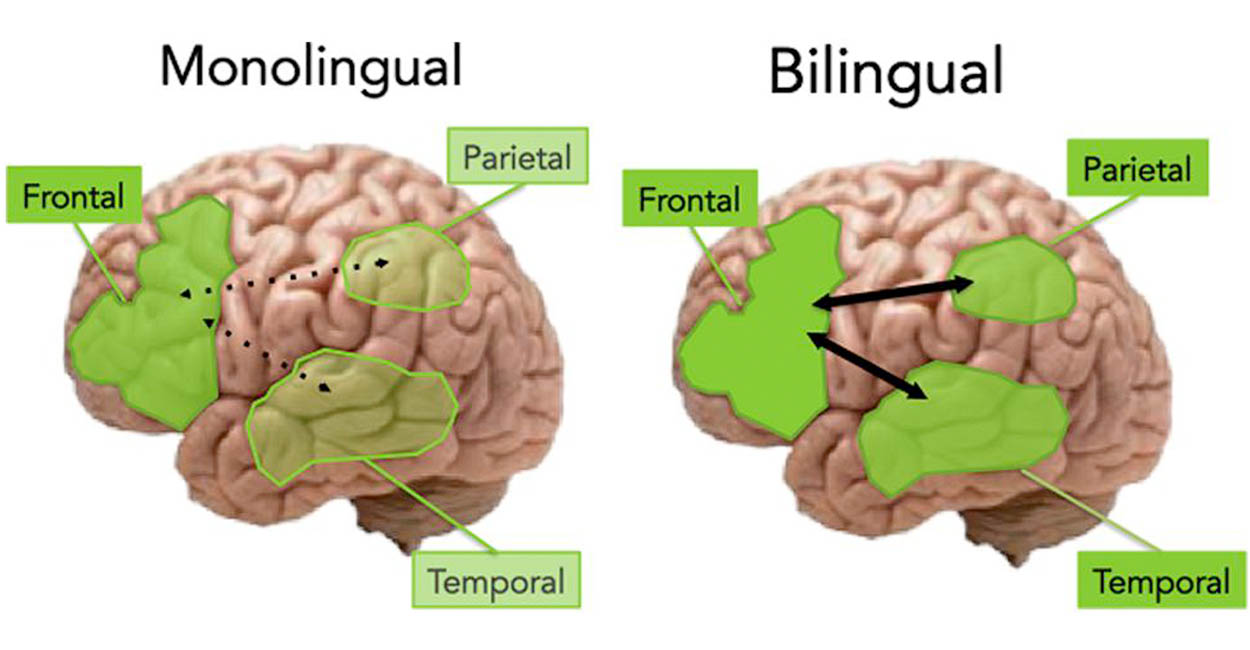
Language is more than a tool for communication. It is a profound cognitive activity that shapes thoughts, emotions, perception, and the way we process the world. Across the globe, millions of people grow up speaking more than one language, and in an increasingly interconnected world, bilingualism is becoming more common than ever. But beyond cultural, social, and economic advantages, researchers have long been exploring a deeper question: Is being bilingual good for your brain?
The short answer, based on decades of scientific research, neuroscience studies, and psychological analysis, is yes. Bilingualism has been associated with enhanced brain flexibility, improved problem-solving skills, better memory, slower cognitive aging, and strong protection against neurological diseases. However, the discussion is far more nuanced, involving complex neural networks, cognitive trade-offs, and lifelong impacts.
In this comprehensive article, we explore the science, myths, benefits, challenges, developmental factors, and the future of bilingual intelligence. Whether you’re bilingual, raising bilingual children, or considering learning a second language, this deep dive will help you understand exactly how bilingualism affects the brain.
Understanding the Bilingual Brain: How the Mind Manages Two Languages
When a person speaks two languages, the brain does something remarkable: it constantly monitors, selects, suppresses, and activates different linguistic systems. For many years, scientists believed this process might confuse the brain or overload it. However, modern cognitive neuroscience tells a different story.
Both languages are always active
Even when someone speaks only one language at a given moment, the other language does not turn off. Instead, the brain keeps both language systems partially activated. This constant activation means the bilingual brain must manage interference, which strengthens neural pathways involved in:
- attention
- focus
- impulse control
- switching tasks
- filtering irrelevant information
This ongoing “mental juggling” acts like a powerful cognitive workout.
Executive function becomes stronger
Executive function is the set of mental processes that allow us to plan, prioritise, multitask, and regulate behaviour. Studies show that bilinguals often outperform monolinguals in tasks involving:
- cognitive flexibility
- decision-making
- rapid problem solving
- adapting to sudden changes
- remembering important details
The bilingual brain becomes more efficient because it must constantly decide which language to use.
Cognitive Benefits of Being Bilingual
Sharper memory and improved recall
Bilingual individuals typically demonstrate stronger working memory. This means they can:
- store and process information simultaneously
- remember instructions
- learn new skills faster
- retain information longer
The brain areas responsible for memory are more active when managing two languages.
Enhanced attention and focus
Since bilinguals routinely suppress one language while using another, they develop superior selective attention. This allows them to:
- focus in noisy environments
- reduce distractions
- concentrate during complex tasks
- shift attention more smoothly
This benefit is seen in both children and adults.
Better problem-solving and creativity
Switching between languages encourages flexible thinking. Bilinguals often show:
- greater creativity
- faster pattern recognition
- stronger logical reasoning
- innovative thinking styles
Studies suggest that thinking in a second language sometimes promotes more rational, less biased decision-making.
Improved multitasking skills
The constant practice of switching languages makes bilinguals more adept at switching between tasks. Their brains become more efficient at managing multiple cognitive demands simultaneously.
Lifelong Brain Health: Bilingualism as Cognitive Protection
One of the most powerful benefits of bilingualism is its long-term protection against brain aging.
Delayed onset of dementia
Multiple studies have consistently shown that bilingual adults experience symptoms of dementia and Alzheimer’s disease several years later than monolingual individuals. Although bilingualism does not prevent these conditions, it enhances the brain’s cognitive reserve.
Cognitive reserve is the brain’s resilience to damage. Bilingualism strengthens this reserve by building more complex neural networks.
Slower cognitive decline with age
Even adults who learn a second language later in life show:
- slower cognitive aging
- better memory retention
- stronger reasoning skills
- improved brain plasticity
This means it’s never too late for the bilingual brain to grow stronger.
Structural brain changes
Research shows bilingualism can lead to observable physical changes in the brain, including:
- increased gray matter density
- stronger connections between brain regions
- enhanced activity in the prefrontal cortex
These structural changes mirror those seen in people who regularly engage in complex mental activities like playing musical instruments or solving mathematical problems.
Does Being Bilingual Make You Smarter? A Closer Look
The question of intelligence is complicated. Intelligence depends on various factors such as logic, memory, creativity, environment, and education.
However, bilingualism contributes to cognitive intelligence, which includes:
- adaptability
- learning speed
- memory
- analytical thinking
- metalinguistic awareness (understanding how language works)
While bilingualism alone doesn’t guarantee higher IQ, it enhances important cognitive skills associated with intelligence.
Psychological and Emotional Benefits of Bilingualism
The bilingual brain is not only cognitively stronger—it is also emotionally richer.
Stronger emotional regulation
Switching between languages can influence emotional responses. Many bilingual individuals report that emotions feel different depending on the language spoken. This allows for:
- better emotional control
- healthier self-expression
- improved empathy
Increased confidence and cultural awareness
Language opens doors to different cultures, traditions, and thought patterns. Bilingual people often develop:
- broader worldviews
- higher intercultural sensitivity
- stronger social connections
This can lead to improved psychological well-being.
Greater adaptability
Speaking two languages trains the brain to adapt quickly to new environments, social settings, and communication styles.
Bilingual Children: Do They Have an Advantage?
Parents often worry that raising a child with two languages might cause confusion or slow development. Modern research overwhelmingly disproves this myth.
No, bilingual children are not confused
Although bilingual kids may mix languages early on, this is normal and temporary.
Developmental advantages
Bilingual children show:
- earlier understanding of symbolic representation
- advanced thinking related to how language works
- better problem-solving skills
- stronger memory and concentration
Long-term academic benefits
Bilingual children often display enhanced reading comprehension and greater proficiency in learning additional languages.
Challenges of Being Bilingual (and Why They Don’t Cancel the Benefits)
While the benefits are clear, bilingualism also comes with challenges:
Slower word recall
Bilinguals sometimes take longer to retrieve a specific word because the brain has more vocabulary to manage.
Smaller vocabulary in each language
A bilingual individual may know fewer words in one language compared to a monolingual person. However, combined vocabulary across languages is usually larger.
Code-switching can be misunderstood
Switching between languages is natural, but in certain environments it may be discouraged or misunderstood.
Maintaining fluency requires practice
Without regular exposure, language ability can weaken. Bilingualism is a skill that must be maintained.
Despite these challenges, the cognitive advantages significantly outweigh any disadvantages.
Adult Bilingualism: Is It Too Late to Benefit?
Absolutely not.
Adults can still experience brain growth
Adult learners benefit from increased:
- memory
- brain plasticity
- focus
- neural connectivity
Learning a language builds new neural pathways
Even after age 50 or 60, learning a second language stimulates brain regions associated with long-term cognitive health.
Benefits appear quickly
Studies show measurable brain benefits after only a few months of active language learning.
Language, Identity, and the Brain: A Deeper Connection
Bilingual people often describe feeling like “different versions of themselves” depending on the language they speak.
Each language shapes personality differently
This phenomenon is linked to:
- cultural associations
- emotional memories
- context-based communication styles
Bilingualism enriches identity
Speaking more than one language creates a multidimensional identity, enhancing emotional intelligence and social awareness.
The Future: Why the World Is Becoming More Bilingual
Globalization is making bilingualism more common than ever.
10.1 Economic advantages
Employers prefer bilingual individuals for roles in:
- international business
- diplomacy
- healthcare
- education
- technology
Cultural exchange
The digital age connects billions of people across linguistic borders.
Education trends
Schools worldwide are increasingly introducing bilingual programs to prepare children for a globalised future.
Final Verdict: Yes, Being Bilingual Is Exceptionally Good for Your Brain
Throughout life, from childhood to old age, bilingualism impacts the brain in profound and positive ways:
- sharper memory
- stronger attention
- enhanced creativity
- better multitasking
- delayed dementia symptoms
- increased cognitive resilience
- richer cultural understanding
- improved emotional intelligence
Speaking more than one language is truly one of the most powerful cognitive tools available.
Whether learned in childhood or adulthood, bilingualism enriches the brain, strengthens the mind, and expands human potential in extraordinary ways.