





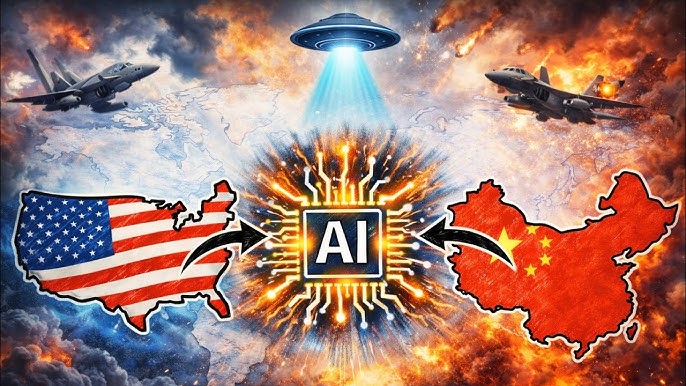
US China AI Cold War
Artificial Intelligence Has Become the New Global Power Battlefield
The world has entered a new US China AI Cold War period of strategic competition in which artificial intelligence is no longer only a technological tool but a central measure of national power. The phrase US China AI Cold War has become increasingly important because the United States and China now treat AI as a defining force that will shape military influence, economic leadership, industrial growth, political leverage, and global standards for decades.
In earlier eras nations competed for territory, natural resources, and military reach, but in the present era the most powerful competition is increasingly taking place through data centers, semiconductor factories, research laboratories, cloud infrastructure, and algorithm design. Artificial intelligence has become the most influential strategic technology because it affects nearly every major system of modern society.
Banking systems now depend on predictive algorithms, logistics depend on automated planning, healthcare increasingly uses intelligent diagnostics, manufacturing uses machine optimization, and defense planning uses real-time data analysis. Because AI can transform all these sectors simultaneously, governments now view AI leadership as equal to strategic security.
The United States sees AI leadership as essential for preserving technological influence across the world because American technology companies built many of the early systems that dominate cloud computing, advanced software frameworks, and digital platforms. China sees AI leadership as equally essential because it believes digital power is necessary for long-term national modernization and global competitiveness.
Both countries therefore invest heavily in research, infrastructure, talent, and policy support. The rivalry increasingly resembles a cold war because both sides seek advantage while limiting dependence on the other side. Export controls, investment screening, research restrictions, industrial policy, and strategic alliances all now reflect this technological contest US China AI Cold War.
Unlike previous geopolitical conflicts, the AI competition is deeply connected to economic systems. AI is not only about innovation; it is also about who controls future productivity. Nations that master advanced AI may reduce production costs, accelerate industrial output, improve national security systems, and dominate future digital trade. This explains why AI policy is now discussed not only by engineers but also by presidents, defense ministers, economic planners, and foreign policy experts. Every major AI breakthrough now has geopolitical meaning because it may influence strategic balance far beyond the laboratory.
Why Artificial Intelligence Is Treated as a Strategic Security Asset
Artificial intelligence became a US China AI Cold War security issue because governments realized that digital systems can influence national power faster than many traditional industries. AI systems can analyze massive information flows within seconds, detect military patterns, improve intelligence processing, and optimize critical national systems. In defense planning this matters enormously because speed often determines strategic advantage. If one country processes battlefield data faster, predicts cyber threats earlier, and deploys intelligent systems more efficiently, it gains a major operational advantage.
The United States has integrated AI into defense planning because modern military systems increasingly depend on intelligent support tools. Satellite imagery analysis, cyber defense, threat detection, logistics planning, and predictive maintenance now all benefit from machine learning systems. China has also accelerated military AI investment because strategic planners there believe digital capability will define future security balance. Military modernization in both countries increasingly includes autonomous systems, AI-supported surveillance, and predictive analysis.
The importance of AI also extends beyond defense. Governments now use AI in public administration, energy forecasting, transport systems, and crisis response. Because intelligent systems can improve state efficiency, countries with stronger AI ecosystems may govern more effectively in key sectors. This creates a direct connection between AI and state capacity. Strategic independence therefore becomes important because no major power wants essential national systems to depend entirely on foreign technology.
Another reason AI is treated as strategic is that it changes how quickly national decisions can be made. Systems that analyze trade flows, industrial risks, and financial trends provide governments with faster policy insight. This means AI influences not only military strength but also economic decision-making. Strategic planners increasingly argue that future power belongs partly to countries that process information best. AI therefore becomes not just software but national infrastructure.
Semiconductor Competition Is the Industrial Core of the AI Cold War
Artificial intelligence cannot advance without advanced semiconductor power. The most sophisticated AI models require enormous computing capability, and that capability depends on high-performance chips. For this reason semiconductor competition has become the industrial heart of the US China AI Cold War.
The United States currently maintains major advantages in chip design software, advanced processor architecture, and high-end computing ecosystems. Many of the world’s most important AI chips depend on American design leadership. Because of this, Washington increasingly uses export controls to restrict access to certain advanced processors and manufacturing technologies. The objective is to slow China’s ability to train extremely advanced AI systems at full scale.
China has responded by accelerating domestic semiconductor development at unprecedented speed. National investment supports fabrication plants, design firms, equipment research, and domestic supply chain resilience. Chinese policymakers understand that AI independence is impossible without chip independence. Therefore semiconductor development now receives strategic attention equal to large industrial policy programs US China AI Cold War.
Chips matter because they determine speed, efficiency, and cost in AI training. Large language models, advanced predictive systems, and industrial AI platforms all require enormous parallel computing power. A shortage of advanced chips slows progress immediately. That is why semiconductor restrictions influence global AI competition so strongly.
The semiconductor issue also affects alliances. Countries that produce critical chip equipment now occupy important positions in global strategy because supply chains are highly interconnected. Semiconductor control therefore goes beyond bilateral rivalry. It affects global manufacturing relationships and technology access across multiple regions.
Data Has Become the Most Valuable Strategic Resource
If chips provide the power for AI systems, data provides the intelligence foundation. Artificial intelligence improves through massive volumes of information. This means that data quality, scale, and diversity directly affect model strength.
China possesses one of the world’s largest digital ecosystems. Large urban populations, digital payments, logistics systems, smart devices, and online services generate enormous streams of usable information. This creates strong training potential for domestic AI development. The United States also benefits from enormous global digital infrastructure through software ecosystems, cloud services, and large international digital platforms.
Because of this, data has become a strategic resource comparable to industrial raw materials in earlier eras. But unlike physical resources, data expands continuously through daily activity. Every transaction, movement, search, and digital interaction contributes to future AI capability.
Governments increasingly regulate how data is stored, transferred, and protected because information sovereignty now influences national competitiveness. Countries do not want critical digital information to become strategically dependent on foreign systems.
The quality of data also matters as much as quantity. Accurate industrial data, scientific data, language data, and operational data improve advanced AI models in different sectors. Nations that organize and protect high-value data effectively gain long-term advantages.
AI Companies Have Become National Strategic Champions
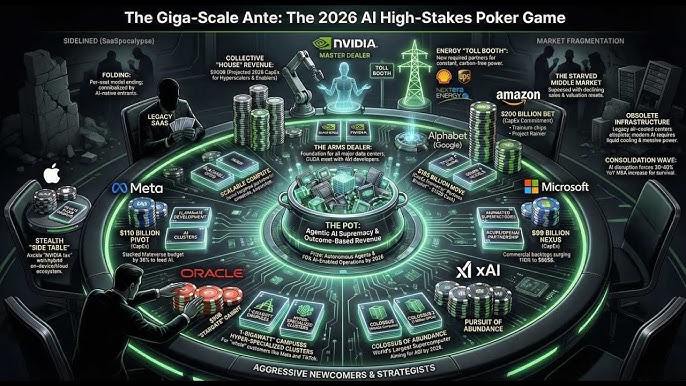
Technology companies now occupy roles once associated mainly with national industrial champions. In the United States, major AI companies influence cloud computing, model architecture, enterprise AI systems, and research leadership. In China, major technology firms drive rapid deployment across commerce, smart infrastructure, and industrial systems.
Governments increasingly support these companies because private innovation speed determines national strength in AI. Research breakthroughs inside private laboratories now influence geopolitical discussions. A major model release or infrastructure advance may immediately change strategic expectations.
Public policy increasingly supports AI ecosystems through funding, infrastructure, education, and research cooperation. Companies therefore operate inside larger national competition frameworks rather than purely commercial environments.
Talent has become equally important. Both countries compete intensely for top AI researchers, engineers, mathematicians, and semiconductor experts. Human capital now functions as strategic power because advanced systems depend on exceptional technical expertise.
AI Is Reshaping the Global Economic Order
Artificial intelligence is already changing productivity in manufacturing, logistics, healthcare, finance, and services. Countries leading in AI may shape future economic growth patterns for decades.
The United States sees AI as a productivity engine capable of strengthening long-term economic leadership. China views AI as central to industrial upgrading and future competitiveness. Both countries therefore treat AI deployment as an economic priority.
Automation supported by AI reduces costs, improves forecasting, and accelerates output. Industrial AI systems optimize production lines, supply chains, and quality control. Financial AI improves risk analysis and market forecasting.
This means the AI Cold War is also an economic growth contest. Leadership in AI may influence future export competitiveness, industrial scale, and innovation strength.

Global Alliances Are Being Influenced by AI Standards
The rivalry also affects other countries because digital systems increasingly require strategic choices. Nations must decide which cloud systems, semiconductor suppliers, regulatory standards, and digital partnerships to prioritize US China AI Cold War.
AI governance has therefore become part of diplomacy. Countries debate safety standards, ethical frameworks, military limits, and digital trade rules.
Whoever shapes standards first may influence future global dependence. This gives AI regulation strategic meaning beyond domestic policy.
Military AI Creates the Greatest Strategic Risk
Military AI remains the most sensitive dimension because automation inside security systems raises concerns about escalation speed. Autonomous analysis and rapid-response systems can shorten decision time during crises.
Both major powers understand that AI can improve military efficiency, but they also recognize that excessive automation may create strategic instability.
This makes military AI one of the most carefully watched areas of future competition US China AI Cold War.
The Future of the US China AI Cold War
The US–China AI Cold War will likely intensify because artificial intelligence now influences nearly every major dimension of future power. Semiconductors, talent, infrastructure, data, and policy will remain decisive fronts.
Unlike earlier cold wars, this competition moves through research centers, industrial systems, and digital ecosystems rather than traditional ideological borders.
But its long-term consequences may be equally large because AI is shaping the future structure of economic and strategic leadership across the world.