

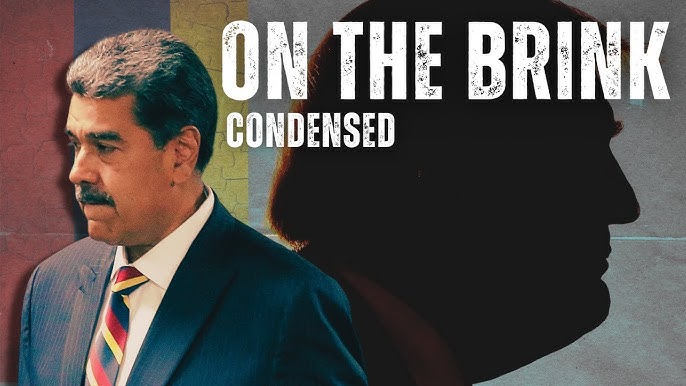
Venezuela on the Brink Power Security and Uncertainty
Introduction
In the opening weeks of 2026,Venezuela on the Brink, Venezuela entered. An unprecedented chapter of political and security turmoil that has captured global attention and ignited intense debate across diplomatic, legal, and humanitarian forums. Triggered by a highly controversial foreign military intervention. That resulted in the capture of Venezuela’s long standing president. Nicolas Maduro , the crisis has reshaped not only the internal dynamics of the nation. But also regional stability in Latin America. And broader questions about international norms of intervention and sovereignty Venezuela on the Brink.
This article provides a comprehensive analysis of the political and security upheaval in Venezuela as deeply rooted in decades long governance challenges, economic collapse, social fragmentation, and shifting international relationships. By exploring the historical context, key developments, domestic impacts, geopolitical implications, and potential future trajectories, this analysis seeks to illuminate why Venezuela’s crisis remains one of the most consequential global affairs of the early twenty first century.
Historical Context Building Pressures Beneath the Surface
Political Centralisation and Erosion of Democratic Institutions Venezuela on the Brink
Venezuela’s political trajectory throughout the early 21st century was characterised by increasing centralisation of authority in the executive branch and parallel weakening of institutional checks and balances. Over time, key state institutions responsible for electoral oversight, accountability mechanisms, and judicial independence came under the influence of the ruling political apparatus. This gradual consolidation of political power limited opposition space, marginalised dissenting voices, and contributed to entrenched polarisation.
While earlier administrations enjoyed significant public support driven by social welfare promises and expansive public spending enabled by oil revenues, the long-term impact of centralised governance without robust institutional safeguards laid the groundwork for deep mistrust across the political spectrum. This distrust intensified over time as opposition movements increasingly viewed the government as resistant to fair competition and independent oversight.
Economic Decline and Humanitarian Strain
Once one of the wealthiest countries in Latin America by virtue of its vast oil reserves, Venezuela’s economy entered a period of steep decline beginning in the mid 2010s. Mismanagement of state oil enterprises, corruption, depletion of critical infrastructure, and punitive international sanctions created conditions of hyperinflation, currency collapse, and widespread deprivation. The failure to invest in maintenance and modernisation of oil production facilities further exacerbated output declines, undermining the primary source of foreign exchange and public revenue Venezuela on the Brink.
By the early 2020s, basic services such as electricity, healthcare, and water were unreliable or non-existent in many regions. Public hospitals lacked essential medicines, electricity blackouts became routine, and food scarcity drove prices to levels affordably for the average household. As economic conditions deteriorated, breadwinner employment opportunities became scarce, and the informal economy expanded as households struggled to survive.
These harsh economic realities fuelled widespread disillusionment and ultimately prompted waves of emigration. Millions of Venezuelans made the difficult choice to leave their homeland in search of basic security, employment, and education opportunities elsewhere. This migration stream became one of the most significant in the Western Hemisphere, placing burdens on neighbouring countries and reshaping demographic patterns across the region.
Polarisation and Loss of Political Legitimacy
Political polarisation intensified as economic hardship deepened. Large segments of the population viewed government policies as ineffective or corrupt, while others saw opposition movements as unable to propose cohesive, viable alternatives. Public trust in electoral processes eroded dramatically as accusations of fraud, irregularities, and lack of transparency became commonplace in elections throughout the late 2010s and early 2020s.
Beyond traditional political disagreements, these fractures came to symbolise broader clashes over identity, governance philosophy, and distribution of resources. Social tension boiled over into street protests that were met with harsh responses from security forces, contributing to an atmosphere of fear, mistrust, and fragmentation.
By 2024, the political system had become deeply dysfunctional, with opposition groups claiming that electoral institutions were tilted against them and governing authorities becoming increasingly intolerant of dissent. The stage was set for crisis.
The 2026 Military Intervention and Capture of Nicolas Maduro
Development of the Intervention Scenario
In early January 2026, armed forces from a foreign power executed a well-coordinated intervention in Venezuelan territory aimed at seizing President Nicolás Maduro and key figures within his government. The operation involved aerial strikes on selected targets, deployment of special forces units, and rapid extraction of the president and his wife.
This intervention shocked the world in both scale and audacity. For the first time in contemporary history, a sovereign head of state had been removed in such a decisive manner without explicit invitation or cooperation from the Venezuelan government. The operation was framed by its sponsors as a necessary response to alleged criminal activities, including the alleged leadership of transnational criminal networks and narcotics trafficking organisations linked to senior state actors.
The speed and precision of the intervention, combined with its high-profile outcome, stunned geopolitical observers and ignited fervent international commentary.
Official Justifications and Controversies
The official narrative offered by the intervention’s proponents emphasised that decades of international diplomatic engagement, sanctions, and negotiations had failed to alter the trajectory of Venezuelan governance and that more assertive action was required to protect regional security and confront organised criminal activity.
However, this justification raised immediate and intense controversy. Critics around the world condemned the action as a violation of international law, asserting that unilateral military intervention in a sovereign nation without approval from international bodies contravenes foundational principles of non-interference. Many international legal scholars assert that while combating transnational crime is a legitimate interest of states, the use of military force in another country’s territory without consent is prohibited except in narrowly defined self defence scenarios recognised by international conventions.
This debate over legality and legitimacy has dominated discussions in diplomatic forums, academic publications, and media commentary. Determining whether the intervention constituted a necessary enforcement action against criminal governance or an unlawful act of aggression has become a central point of contention in global geopolitics.
Domestic Consequences Instability, Power Vacuums, and Security Challenges
Fragmentation of Political Authority
Following the removal of Maduro, an interim leadership council declared itself the legitimate governing authority of Venezuela. Yet this transition was far from smooth. Without established legal frameworks for succession or widely recognised electoral mandates, the interim government struggled to assert authority across all regions.
In many parts of the country, local leaders filled the power vacuum in ad hoc and often competing ways. Some regional governors aligned with the interim authority, while others maintained loyalty to remnants of the previous government or pursued independent power. This fragmentation challenged centralised governance, leading to confusion and conflict over jurisdiction, law enforcement, and administrative priorities.
Furthermore, the absence of a unified political vision made it difficult to coalesce broad public support. While many citizens were relieved at the removal of a long standing and highly unpopular leadership, there was no clear roadmap for governance, reconciliation, or national reconstruction.
Erosion of Security and Rise of Armed Factions
Even before the intervention, Venezuela’s security landscape was complex and volatile. Multiple armed groups operated with varying degrees of formal affiliation with state structures: official army units, national guard contingents, local police forces, and loosely organised militia networks that had proliferated in the urban poor neighbourhoods and rural regions.
After the collapse of centralised authority, these forces began jockeying for territorial control. In some urban districts, community defence groups with roots in earlier militia structures asserted dominance, controlling access to markets, services, and transportation routes. In rural areas, criminal organisations expanded their reach, exploiting the absence of uniform law enforcement to traffic contraband, extract protection payments, and recruit combatants.
With competing armed entities and an overall deteriorated security infrastructure, Venezuela faced an increased risk of sustained internal conflict. The potential for widespread violence between rival factions, against civilian populations, or in clashes with international peacekeeping forces remained a pressing concern for analysts and humanitarian planners alike.
Impact on Civil Society and Basic Services
The upheaval disrupted what remained of Venezuela’s already weakened public services. Healthcare facilities, electricity grids, and water distribution networks. A Long under strain from decades of under investment and mismanagement. Now faced further deterioration as institutional capacity weakened.
Hospitals struggled without reliable power or supplies, forcing healthcare professionals to make difficult decisions about patient care. Interruptions in food distribution and shortages of basic goods drove prices upward. And contributed to deepening food insecurity in both urban and rural areas.
Educational institutions, meanwhile, faced closures or sporadic operations as parents. And students grappled with safety concerns, displacement, and economic hardship. The disruption of basic societal functions compounded. The sense of instability and uncertainty that permeated everyday life.
Geopolitical Ramifications and Global Debate
Regional Polarisation and Diplomatic Tension
The intervention in Venezuela heightened political fissures across Latin America. Some governments strongly condemned the action as a breach of sovereignty and a dangerous precedent for regional relations. Others expressed cautious optimism that the removal of a polarising and widely criticised leadership could open new opportunities for democratic renewal.
Diplomatic ties between neighbouring states and the intervening power became strained, with some nations recalling ambassadors, issuing formal protests, or calling for regional organisations to address the crisis. These reactions reflected broader ideological divides in the region, particularly between governments with socialist traditions and those advocating more market-oriented policies.
The turbulence in diplomatic relations has complicated efforts to build regional cooperation mechanisms for trade, migration management, and security cooperation all of which are critical to addressing shared challenges arising from the Venezuelan crisis Venezuela on the Brink.
Global Legal and Normative Debates
At the international level, the Venezuela intervention catalysed discussions on the nature of sovereignty, the limits of military action, and the role of international institutions in mediating crises. Scholars, diplomats, and policymakers debated whether existing frameworks for collective security. And humanitarian intervention adequate or whether new norms. It needs to established for addressing governments accused of systemic criminality and human rights abuses.
Proponents of stricter sovereignty protections argued that unilateral interventions undermine the international system and pave the way for powerful nations to impose their will on weaker states. Conversely, advocates of more assertive measures contended that entrenched autocratic governance with global criminal links necessitates innovative approaches that protect citizens and regional stability.
These competing views reflect a broader tension in international relations between respect for sovereignty and the imperative to respond to crises that seem to defy traditional diplomatic tools.
Economic Implications Oil Markets and Recovery Prospects
Decline of Oil Production
Venezuela’s oil industry, once the cornerstone of its economy, had already declined steeply before the political upheaval. Technical neglect, lack of investment, sanctions, and emigration of skilled workers reduced output to a fraction of its historic levels. The crisis further destabilised production as infrastructure suffered damage, and operational leadership positions remained vacant or contested.
For global energy markets, the situation introduced additional uncertainty. Although Venezuela’s contribution to world oil supply had diminished. The possibility of renewed investment and production resurgence. It continued deterioration affects pricing expectations. And strategic planning among major producers and consuming nations.
Investment analysts noted that restoring Venezuela’s oil infrastructure will require massive capital injections, long term contractual security, and a stable political environment conditions that are currently uncertain at best.
Economic Reconstruction Challenges
Beyond oil, Venezuela’s broader economic recovery faces formidable obstacles. Restoring basic services, rebuilding infrastructure, stabilising the currency, and attracting foreign direct investment require a level of political cohesion and institutional credibility that the country does not yet possess.
The government’s ability to negotiate debt restructuring, reintegrate with international financial institutions, and reestablish trust with global markets will be central to any recovery prospects. However, such processes are inherently slow and complex, particularly in environments marked by political uncertainty.
Humanitarian Crisis and Migration
Displacement and Social Hardship
Even before the upheaval, Venezuela’s humanitarian crisis was pronounced. Millions of families lacked consistent access to nutritious food, clean water, medical care, and secure housing. The removal of central authority compounded these hardships, accelerating displacement within Venezuela and intensifying pressure on neighbouring countries that had already absorbed large numbers of migrants.
Humanitarian organisations mobilised to provide emergency assistance, but logistical challenges, security concerns, and limited funding constrained their reach. The urgent priority became ensuring safe corridors for food and medical supplies, supporting refugees in host communities, and mitigating the risk of trafficking and exploitation among vulnerable populations.
Regional Burden of Migration
Countries bordering Venezuela faced growing demands on social services, education systems, and labour markets as refugees and asylum seekers sought stability. Host nations grappled with balancing domestic political pressures against humanitarian responsibilities, spelling complex social dynamics at national and local levels.
Regional cooperation frameworks were tested as governments negotiated burden sharing arrangements and sought international support. The scale of migration called for innovative responses, including increased humanitarian aid, expansion of legal pathways for work and residence, and long term integration planning.
Prospects for Peace Reconstruction and Long Term Stability
Pathways to Political Consensus
A enduring resolution of the Venezuelan crisis hinges on sustainable political compromise and inclusive governance. This requires creating spaces for meaningful dialogue between polarised factions, establishing interim constitutional arrangements, and organising free and fair elections under robust international supervision.
Building consensus among diverse political actors is a substantial challenge given deep distrust and past hostilities. Yet without broad political legitimacy, any governing authority risks continued resistance and lack of public confidence.
Rebuilding Institutions and Rule of Law
Equally important is the reconstruction of institutional frameworks that support accountability, transparency, and protection of civil liberties. Strengthening judicial independence, enforcing anti corruption mechanisms, ensuring media freedom, and protecting human rights are essential components of rebuilding trust in the state.
International partnerships focused on capacity building, technical assistance. And legal reform may assist in these efforts. But the ultimate responsibility lies. With Venezuelan stakeholders committed to long term stability.
Economic Recovery and Social Investment
Economic revitalisation strategies must prioritise diversification beyond oil, investment in human capital, and rehabilitation of critical infrastructure.
Public private partnerships, conditional debt relief. And phased reintegration into global markets. It could help catalyse economic momentum, provided. That political stability improves. Social investment particularly in education. Healthcare. And housing is necessary to address the deep scars left by years of deprivation. And to foster resilience among future generations Venezuela on the Brink.
Conclusion A Turning Point with Global Resonance
The political and security upheaval in Venezuela stands as a defining moment with implications that extend far beyond its borders. It challenges conventional notions of sovereignty. It tests the limits of military intervention, exposes vulnerabilities. In global governance systems, and underscores. The profound human costs of political dysfunction and economic collapse Venezuela on the Brink.
A path of reconciliation, democratic revival. And social renewal or lapses into prolonged fragmentation. Hardship will depend on the resolve of its people. The ingenuity of its leaders, and the nature of international engagement.
As the world watches, the lessons from Venezuela’s experience. It will continue to shape debates about how nations confront entrenched crises. And balance principles of non intervention with pressing humanitarian needs. And forge pathways toward lasting peace and stability.